First Trimester Yoga to Reduce Fatigue, Stress & Early Discomfort
The moment you see those two pink lines, life changes. There’s excitement, happiness, and a whole lot of dreams. But let’s be honest — the first trimester of pregnancy can feel really tough. Your body feels tired all the time, emotions go up and down without warning, and even simple daily tasks start feeling like hard work.
This is the phase when your body is silently doing the biggest job of all — creating a new life. And because so much is happening inside, it’s normal to feel drained, stressed, and uncomfortable. This is exactly where Online pregnancy yoga classes for first trimester steps in as a gentle, supportive friend.
First trimester yoga is not about fitness or weight loss. It’s about reducing fatigue, calming stress, and easing early pregnancy discomfort while keeping both mom and baby safe.
Why the First Trimester Feels So Challenging?
The first trimester usually covers weeks 1 to 12, and this is when most women feel the strongest symptoms.
During this time:
- Pregnancy hormones rise rapidly
- Progesterone causes sleepiness and low energy
- Blood pressure may drop
- Blood sugar levels fluctuate
- The placenta starts developing
All these changes can make you feel:
- Extremely tired, even after good sleep
- Nauseous or sick, especially in the mornings
- Emotionally sensitive or moody
- Anxious about the pregnancy
- Slight cramps, back pain, or body aches
Up to 70% of pregnant women report symptoms of stress and anxiety at some point during pregnancy, and about 18% show anxiety symptoms in the first trimester specifically. Many women feel guilty for feeling this way, but there’s absolutely no reason to. Your body is adjusting to a huge transformation, and it needs support, not pressure.
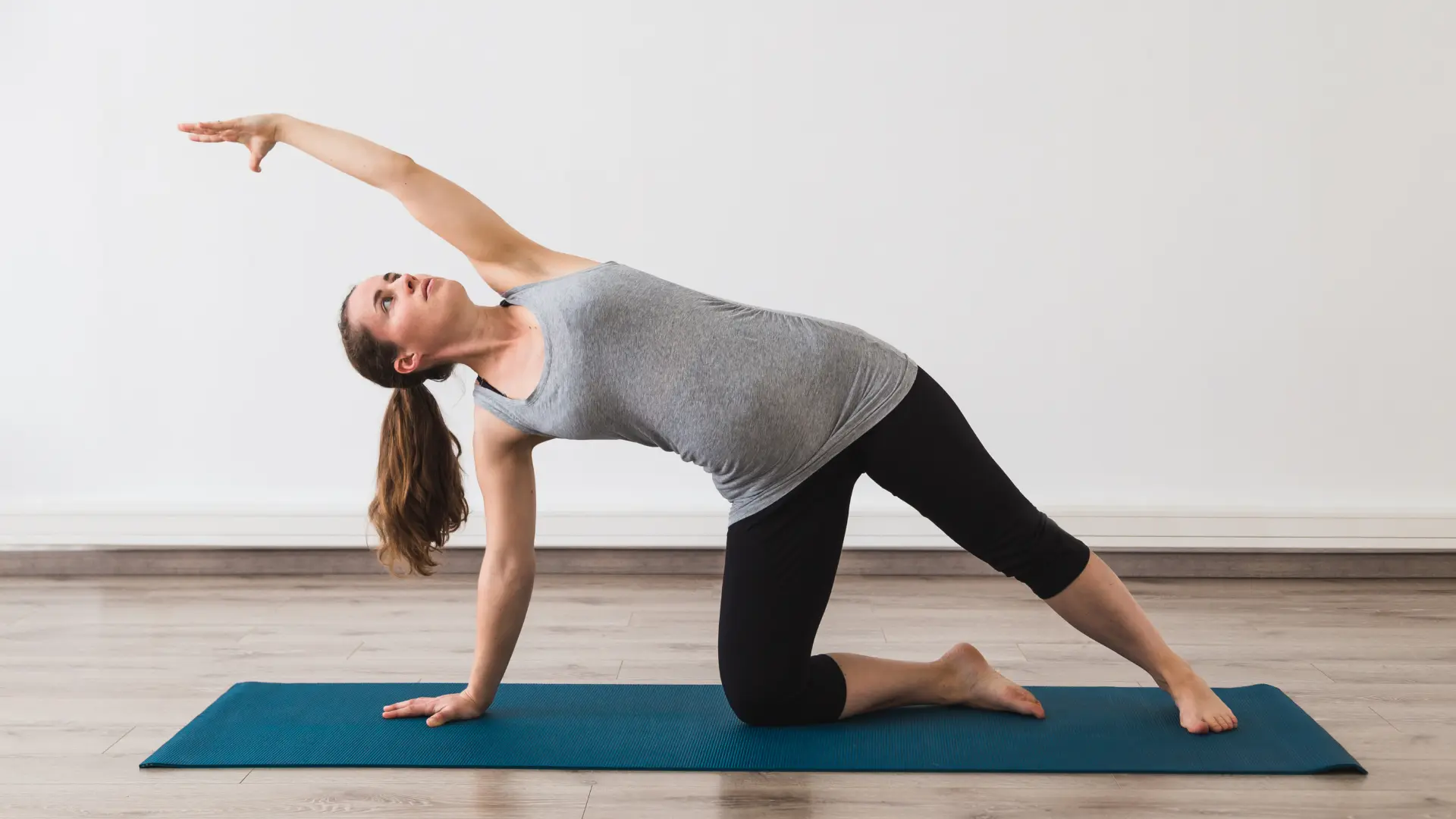
Is Yoga Safe in the First Trimester?
This is one of the most common questions — and the answer is yes, yoga is safe in the first trimester when practiced correctly.
First trimester yoga is:
- Slow
- Gentle
- Breath-focused
- Relaxing
It avoids anything that puts pressure on the abdomen or overworks the body.
You should avoid:
- Strong abdominal workouts
- Deep twisting poses
- Backbends
- Inversions
- Holding the breath
Instead, the focus is on light stretches, breathing, relaxation, and emotional balance. Practicing under the guidance of a prenatal yoga instructor is always the safest option.
How First Trimester Yoga Helps Reduce Fatigue?
Feeling tired all day is one of the biggest struggles in early pregnancy. Even small tasks can feel exhausting. Yoga helps manage this fatigue in a very natural way.
Improves Blood Circulation
Gentle yoga movements improve circulation, helping oxygen and nutrients reach your muscles and brain. This reduces that heavy, sleepy feeling.
Supports Hormonal Balance
Yoga helps calm stress hormones like cortisol, which can worsen fatigue and emotional swings.
Improves Sleep Quality
Relaxation and breathing practices help your nervous system slow down, making sleep deeper and more refreshing.
Maintains Steady Energy
Instead of sudden energy crashes, yoga helps keep your energy levels more balanced throughout the day.
You may not feel super active instantly, but you’ll notice you’re less exhausted and more stable.
Managing Stress and Anxiety with First Trimester Yoga
Pregnancy doesn’t just affect the body — it affects the mind too. During the first trimester, many women experience:
- Overthinking
- Fear of miscarriage
- Emotional ups and downs
- Anxiety about the future
Online Yoga classes help calm the mind by activating the body’s relaxation system. With regular practice, yoga:
- Slows down racing thoughts
- Improves emotional control
- Reduces anxiety naturally
- Builds mental confidence
Just sitting quietly, breathing deeply, and moving gently can make a huge difference. Yoga gives you that mental pause you didn’t know you needed.
Yoga for Early Pregnancy Discomfort
Early pregnancy discomfort can be annoying and tiring. The good news? Yoga can help reduce many of these issues gently.
Nausea and Morning Sickness
Gentle breathing techniques and seated poses help calm the digestive system and reduce nausea triggers.
Back Pain and Hip Discomfort
Hormonal changes loosen your joints, which can lead to aches. Light stretching helps relieve stiffness and improve posture.
Headaches and Neck Tension
Yoga releases tension in the neck, shoulders, and upper back, improving circulation and reducing headaches.
Bloating and Constipation
Soft movements help stimulate digestion without putting pressure on the abdomen.
The aim is not to remove all discomfort, but to help you feel more comfortable and relaxed in your body.
You can also check, Pregnancy Yoga Poses to Ease Discomfort to learn more details
Best Yoga Practices for the First Trimester
First trimester yoga includes only pregnancy-safe movements that feel soothing and easy.
Some commonly practiced poses and techniques include:
- Gentle neck and shoulder rolls
- Cat–Cow pose (Marjariasana) for spinal flexibility
- Butterfly pose (Baddha Konasana) for pelvic comfort
- Seated side stretches to improve breathing
- Deep belly breathing
- Anulom Vilom without breath retention
- Guided relaxation and meditation
Each movement should feel comfortable. No pain, no strain, no force. Listening to your body is the most important rule.
How Often Should You Practice First Trimester Yoga?
This phase is not about long or intense sessions.
- Practice 3 to 5 times a week
- Sessions can be 15 to 30 minutes
- Even 10 minutes on low-energy days is enough
Consistency matters more than duration. Some days you may feel energetic, some days not — and both are completely okay.
Why Online First Trimester Yoga Classes Are a Great Choice
Let’s be real — stepping out for classes when you’re nauseous or tired isn’t always possible. This is why online first trimester yoga classes work beautifully.

Benefits include:
- Practicing from home
- No travel stress
- Flexible timings
- Personal attention in small batches
- Pregnancy-specific guidance
You can wear comfy clothes, take breaks when needed, and still enjoy guided, safe yoga practice.
Why You Should Avoid Random YouTube Videos
Random online videos may not consider:
- Your trimester
- Your energy level
- Your discomfort
- Your medical history
A trained prenatal yoga instructor understands:
- What movements are safe
- How to modify poses
- How to guide breathing properly
- How to support emotional well-being
Especially in the first trimester, proper guidance matters more than variety.
Emotional Bonding Starts in the First Trimester
Many moms think bonding begins later, but yoga helps you connect with your baby from the very beginning.
Through calm breathing and quiet moments, you start:
- Feeling more connected
- Becoming emotionally aware
- Creating a peaceful environment for your baby
That calm energy benefits both mother and baby and sets a positive tone for the rest of pregnancy.
Important Safety Tips for First Trimester Yoga
Before starting, always remember:
- Get doctor approval
- Avoid overheating
- Stay hydrated
- Practice on an empty or light stomach
- Stop immediately if you feel discomfort
Your body knows best — yoga should always feel supportive, never stressful.
Conclusion
The first trimester is not about doing more — it’s about doing what feels right.
First trimester yoga helps you:
- Reduce fatigue naturally
- Manage stress and emotions
- Ease early pregnancy discomfort
- Improve sleep and energy
- Build a calm foundation for pregnancy
Slow down. Breathe deeply. Move gently. Trust your body.
You’re growing a life — and that itself is powerful enough. Yoga is just there to make the journey calmer, happier, and more balanced 💛